Taking AI Agents Past the Engineering Team
How to move agents into operations, finance, legal, recruiting, and support — with a workflow owner, a baseline, real governance, and a metric that reflects finished work.

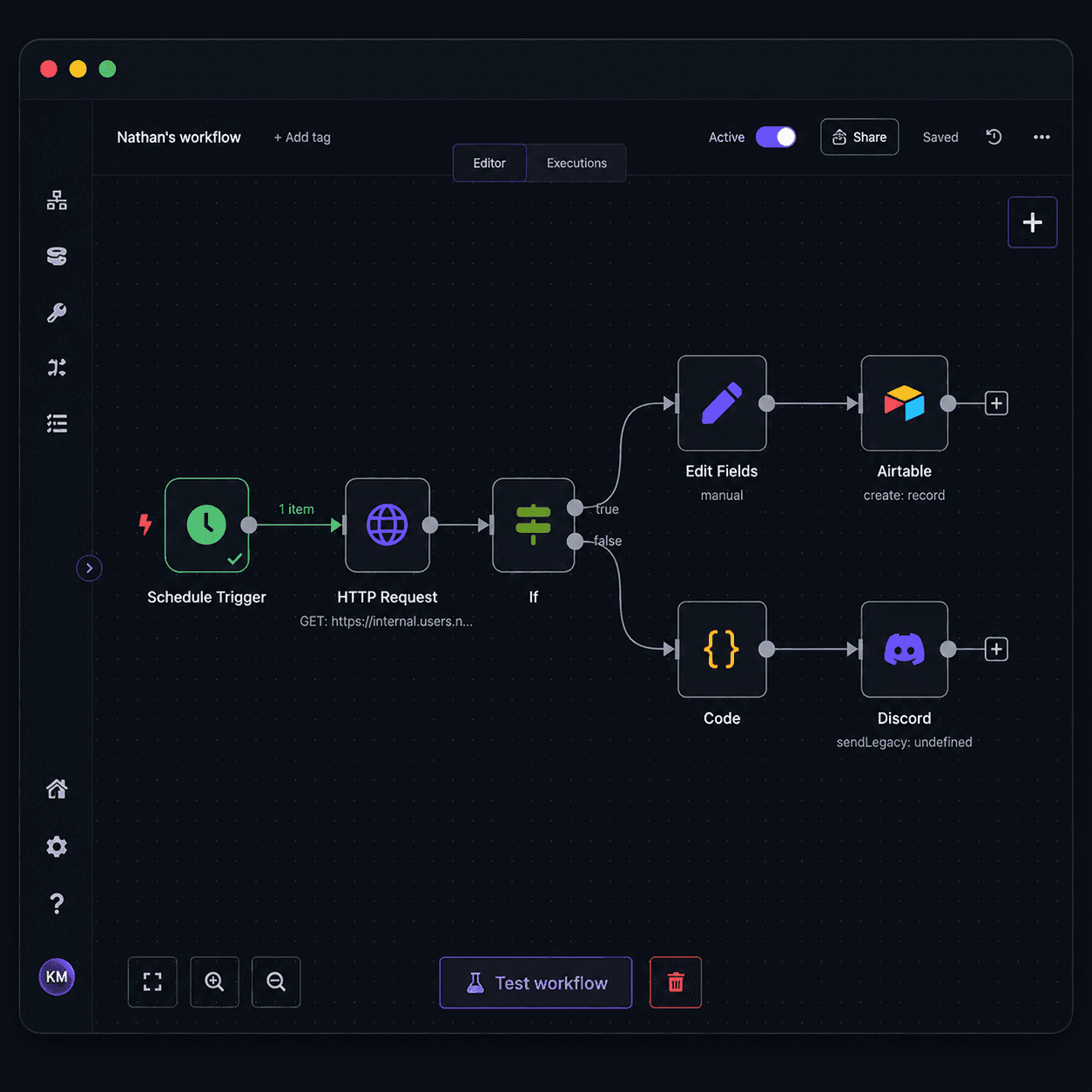
Agents almost always start with engineering, because engineers can evaluate their own output. The larger opportunity is somewhere else entirely: the recurring, deadline-driven knowledge work carried by ops, finance, legal, recruiting, and customer teams. That is also where most rollouts stall.
The failure pattern is consistent. A company buys seats for everyone, sends a training email, and waits for useful workflows to emerge on their own. Six weeks later usage is a spike followed by a flat line, and nobody can say what got done.
Pick a workflow with visible pain and a visible finish line
The best first candidate is boring on purpose: frequent enough that you will see results inside a quarter, slow enough that people complain about it, grounded in systems you already have access to, and owned by a team that can tell good output from bad on sight.
Then write down the trigger, the steps, the approval points, and what “done” means. If two people on the team define done differently, stop. You do not have an AI problem yet. You have a process problem, and an agent will simply automate the disagreement.
- Pair a workflow expert with the build team — not as a stakeholder, as a daily collaborator
- Capture baseline time, quality, backlog, and correction rate before anything is automated
- Start at preparation and recommendation; earn action permissions with evidence
- Train people on review, escalation, and feedback — prompting is the least important skill
- Expand to adjacent work only after the first workflow has produced real proof
Measure finished work, not generated output
Token counts and conversation volume tell you the tool is being opened. They tell you nothing about whether anything reached a customer, closed a ticket, or cleared a queue. Those numbers are popular in status decks precisely because they always go up.
Measure the things the business already cares about: cases resolved, analyses completed, hours returned to the team, correction effort, cycle time, and the share of work that reaches a safe outcome without rework. When your metric matches the metric the department was already judged on, adoption stops needing a mandate.
The exceptions are the job
Every department believes its work is standard until you look. The senior person on the team is valuable because they know which of the sixty edge cases actually matter this quarter. Interview for those before you build. An agent that handles the clean path and escalates cleanly on the rest is genuinely useful. An agent that confidently mishandles the edge cases will be switched off inside a month.
Build a portfolio, not a pile of pilots
Treat every deployment as a reusable operating pattern: the systems it connects, the permission model, the eval set, the human owner, and the production evidence. Do that four or five times and the sixth rollout is fast — not because departments are interchangeable, but because you stopped rediscovering governance, integration, and review from scratch each time.
Primary sources
First-party documentation and announcements used to ground this field note.